

.svg)


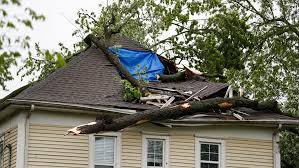
Hail gets most of the attention when DFW homeowners talk about storm damage — and for good reason. But wind damage to roofs is just as common in North Texas, happens far more frequently, and causes just as many expensive problems when it goes unaddressed.
Severe thunderstorms across the Dallas-Fort Worth Metroplex regularly produce straight-line winds exceeding 60 to 80 miles per hour. Tornado-producing supercells push that even higher. Even without hail involved, winds at those speeds put enormous stress on your roofing system — lifting shingle edges, tearing flashing loose, snapping tree branches onto the roof surface, and creating gaps that water exploits the moment the next storm arrives.
The challenge with wind damage is that it's often less visually dramatic than hail damage. A few lifted shingles or a section of missing drip edge doesn't scream emergency the way a yard full of hailstones does. But the consequences of ignoring wind damage to your roof are just as serious — and in many cases, the repair becomes more expensive every week it goes unaddressed.
This guide walks DFW homeowners through exactly what wind damage looks like, what to do in the first 24 to 72 hours after a windstorm, how insurance handles wind damage claims in Texas, and what separates a proper wind damage roof repair from a patch job that fails in the next storm.
The Dallas-Fort Worth area sits at the intersection of several major weather systems. Warm, moist Gulf air collides with dry continental air from the west, creating powerful storm cells that produce strong winds alongside hail and heavy rain. These aren't rare events — they're a regular feature of North Texas weather from late winter through early summer, with additional wind events throughout the fall.
DFW winds during severe storms commonly reach 60 to 80+ mph, and tornado events — which occur in this region more often than almost anywhere else in the country — push those numbers dramatically higher. Even winds in the 45 to 60 mph range, which North Texas experiences multiple times per year, are sufficient to lift shingle edges, separate flashing from its substrate, and stress the fasteners holding your roof system together.
Here's what makes wind damage particularly tricky: it's progressive. A shingle that gets its adhesive seal broken by wind in one storm doesn't necessarily blow completely off in that event. It sits slightly lifted, with its seal compromised. The next storm — even a moderate one — lifts it further. Water gets in. The cycle continues until you have a full leak, blown-off shingles, or structural damage to the decking underneath.
Catching wind damage early breaks that cycle. Ignoring it accelerates it.
Wind damage is not always obvious from the ground, but there are specific things to look for after any significant storm event. Here's what a professional wind damage inspection checks for — and what you can observe yourself from ground level:
The most obvious sign. If you can see bare spots on your roof, sections where the dark underlayment is visible, or if you're finding shingles in your yard, driveway, or landscaping after a storm — your roof has wind damage that needs immediate attention. Those exposed areas are unprotected from rain until they're repaired.
This is the wind damage sign most homeowners miss. The shingles are still physically present, but their rear adhesive seal has been broken by wind uplift. From the ground with binoculars, you may be able to see shingle edges that look like they're lifting at the corners or along the bottom edge. Even if water hasn't gotten in yet, a shingle with a broken seal is going to fail in the next significant storm — the wind has a gap to grab.
Extreme wind uplift can physically crease or fold shingles — bending them backward along a stress line that compromises the waterproofing integrity of the shingle even after it settles back into position. A creased shingle looks intact at a glance but is cracked along the fold line and will leak.
Flashing around chimneys, vents, skylights, and roof valleys is among the most vulnerable components during high wind events. Wind can physically pry flashing away from the surfaces it seals, break the sealant bead around its edges, or lift it enough to create a gap that water enters at the first opportunity. This damage is almost never visible from the ground — it requires getting up on the roof or having a professional inspect it.
Drip edge — the metal strip that runs along the roof perimeter and directs water into the gutter — can be bent, lifted, or torn away during high winds. When drip edge is compromised, water runs directly behind the gutters and down the fascia boards, which causes rot over time.
Wind-driven debris — branches, trash, and other material — frequently impacts gutters and downspouts during DFW storms. Severely dented or detached gutters can't properly direct water away from your roof's edge, contributing to water infiltration and fascia damage.
One of the most common sources of wind roof damage in DFW neighborhoods is tree branches — either from trees on your own property or from neighboring trees. Wind-driven branches can scrape large areas of granules from shingles, puncture the roof surface entirely, or break off entirely and land on the roof with significant impact force. Check around your roofline for signs of branch contact — scratched, bare areas on the shingle surface, or debris lodged in the valleys.
If wind damage has already allowed water into the roofing system, you may see evidence inside: water stains on ceilings or upper walls, musty odors in the attic, or moisture on the attic decking or insulation. These are signs that the wind damage has already progressed past the surface and needs immediate professional attention.
The steps you take immediately after a windstorm directly affect both the extent of the damage and the success of any insurance claim you might file. Here's what to do:
As soon as it's safe after the storm has passed, walk the entire perimeter of your home. Look for shingles on the ground, dents in your gutters and metal components, visible bare spots on the roof, and any tree branches that made contact with the roof surface. Take photos of everything you observe — dated and time-stamped. This documentation is the foundation of your insurance claim.
Go into your attic with a flashlight and look for any signs of fresh moisture, water staining on the decking, or — in the case of more severe damage — daylight visible through the roof boards. Fresh moisture in the attic after a storm is confirmation that the roof has been breached and water is actively entering the structure.
Don't try to assess wind damage entirely on your own, and don't climb onto the roof yourself — wet roofing surfaces are dangerously slippery. Call a professional for a thorough inspection within 72 hours of the storm if possible.
A professional wind damage inspection goes well beyond what's visible from the ground. At Timeless Roofing, we check every slope for lifted shingles, inspect all flashing points, assess drip edge integrity, examine the gutters and downspouts, and check the attic from inside. We document every finding with photos and video so you have a complete record of the storm's impact before weather or time obscures any of the evidence.
After every significant DFW storm, door-to-door contractors flood the area. Many of them are legitimate. Many are not. Do not sign a contract with any contractor who shows up uninvited at your door offering to inspect or repair your roof immediately after a storm. Take your time, do your research, and choose a local contractor with a verifiable track record in the DFW area.
Once you have a professional inspection report and photos documenting the wind damage, contact your insurance company to file the claim. Most Texas homeowner's insurance policies cover wind damage to roofs as long as the damage is from a sudden storm event and not from gradual wear and neglect. Having professional documentation ready before you file puts you in a significantly stronger position for the adjuster meeting.
In most cases, yes — and this is one of the most common questions DFW homeowners ask after a windstorm. Here's how it generally works:
What's covered: Damage from sudden wind events — torn-off shingles, lifted flashing, impact damage from wind-driven debris, and related interior damage caused by water entering through storm-created breaches. Most standard Texas HO-3 policies cover wind damage as a covered peril.
What's not covered: Damage from gradual wear, lack of maintenance, or pre-existing deterioration that made the roof vulnerable before the storm. This is why documenting your roof's condition before storm season matters — and why having a professional inspection record helps establish that your roof was properly maintained.
Your deductible: Texas homeowners in DFW typically carry either a flat dollar deductible (commonly $1,000 to $2,500) or a percentage-of-home-value deductible (often 1 to 2 percent of the insured value). Know which type you have before a storm season begins.
The adjuster meeting: When your insurance company schedules an adjuster visit, have your roofing contractor there with you. At Timeless Roofing, we attend every adjuster meeting for our customers. Wind damage can be subtle — lifted flashing, creased shingles, separated sealant — and having an experienced contractor on the roof alongside the adjuster ensures everything is properly documented rather than glossed over in a quick visit.
Not every windstorm means a full roof replacement. Whether wind damage requires a repair or a full replacement depends on several factors:
Wind damage repair is typically the right call when:
Full replacement becomes the conversation when:
At Timeless Roofing, we give you our honest assessment of which category your situation falls into — based on what we actually find during the inspection, not on what would generate the larger job.
Once your wind damage roof repair or replacement is complete, there are smart steps you can take to reduce your exposure in future storms:
Upgrade to high wind-rated shingles. Quality architectural shingles are rated for wind resistance up to 110 to 130 mph. When replacing wind-damaged shingles, specifying a wind-rated product gives your roof meaningfully better performance in future events.
Ask about Class 4 impact-resistant shingles. Class 4 shingles are engineered for both hail and wind resistance. In a DFW climate where both threats are regular, the upgrade is worth serious consideration — and may qualify you for an insurance premium discount.
Trim trees regularly. Overhanging branches are the single most preventable source of wind-related roof damage in DFW neighborhoods. Annual trimming keeps them from becoming projectiles or impact hazards during severe storms.
Ensure flashing is properly sealed. Properly installed and sealed flashing is significantly more resistant to wind uplift than aged or improperly installed flashing. Annual inspection and sealant maintenance is inexpensive insurance against one of the most common sources of wind-related leaks.
Schedule annual professional inspections. A roof that's inspected and maintained annually has its small vulnerabilities — slightly lifted shingles, hairline flashing cracks, loosened fasteners — addressed before a windstorm turns them into significant damage events.
When a windstorm damages your home, you need a contractor who knows DFW weather, understands the insurance process, and is going to be there from the initial inspection to the final walkthrough — not a team that shows up, collects a deposit, and disappears.
At Timeless Roofing, we've built our entire reputation on being present, being transparent, and doing the job right the first time. We attend every adjuster meeting. We document everything. We tell you honestly whether a repair or a replacement is the right answer. And we're here after the job is done if any question or concern comes up.
That's the contractor every DFW homeowner deserves when a storm damages their home.

Did a recent DFW windstorm leave you wondering about your roof's condition?
Don't wait for the next storm to find out. At Timeless Roofing, we inspect wind-damaged roofs across the DFW Metroplex with thoroughness, honesty, and full documentation — at no cost to you.
Schedule your free wind damage roof inspection with Timeless Roofing today and know exactly where you stand.

.svg)

.svg)
.svg)
.svg)