

.svg)


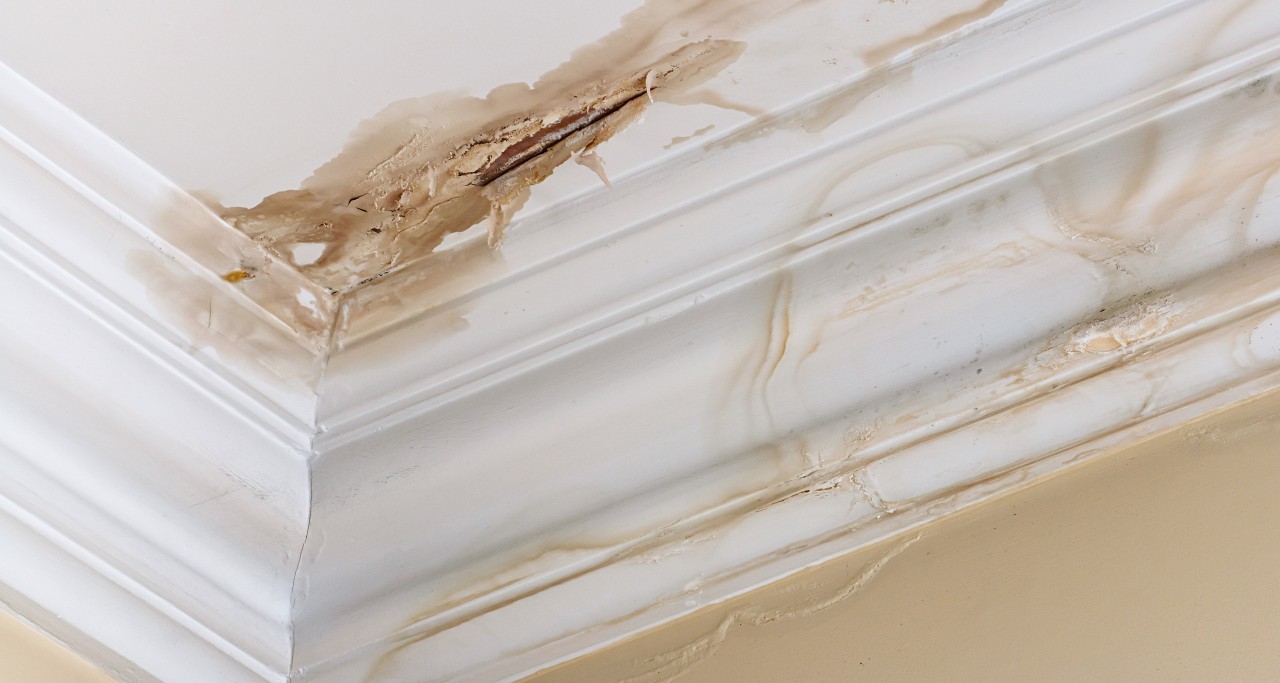
There are few home emergencies more stressful than discovering your roof is leaking. The ceiling stain you've been eyeing for a week finally gets confirmed when a drip hits the bucket you nervously placed underneath it. Or you walk into the attic after a North Texas downpour and find fresh moisture on the decking. Or a brown water stain appears on your living room ceiling after a storm and slowly, unmistakably, grows.
Whatever form it takes, a roof leak in DFW demands your attention immediately — not next week, not after the next storm, right now.
The reason urgency matters so much is that a roof leak is almost never just a roof leak. Water that enters through a breach in your roofing system doesn't politely stay in one place. It travels along rafters, soaks into insulation, wicks into drywall, and creates the dark, moist conditions that mold needs to establish itself — sometimes within 24 to 48 hours in Texas humidity. What started as a minor shingle failure can become a mold remediation project and structural repair if it goes unaddressed for weeks.
This guide is for DFW homeowners in the middle of that stressful moment. We'll walk you through what to do right now, the most common causes of roof leaks in North Texas, when you need professional help immediately versus when you have a little time, and how the roof leak repair process works with Timeless Roofing.
Your first priority is protecting the interior of your home from as much water damage as possible while you figure out the source and severity of the leak.
If water is actively dripping from the ceiling, place buckets or towels under every drip point. Move furniture, rugs, electronics, and any valuables away from the affected area. If you see a water-damaged section of ceiling that looks like it's bulging — a tell-tale sign of water pooling above the drywall — carefully puncture it with a screwdriver to allow the trapped water to drain in a controlled way rather than letting the entire section collapse. It sounds counterintuitive, but it limits the overall damage significantly.
If the leak is in or near a light fixture or electrical outlet, do not touch those fixtures and turn off power to that circuit at your breaker box. Water and electricity are a dangerous combination.
If it's safe to do so, grab a flashlight and get into your attic while rain is still falling or immediately after. This is often where you'll find the clearest evidence of where water is entering. Look for:
The location of the moisture in the attic doesn't always line up directly with where the leak appears on your ceiling — water travels along roof members before dripping down. But the attic gives you your best real-time read on how serious the situation is and roughly where on the roof it's coming from.
Before you clean up, move anything, or make any temporary repairs — document the damage with your phone. Take photos of every area of water damage you can see, dated and time-stamped. Photograph the ceiling stains, the wet insulation in the attic, any water on the decking, and any exterior conditions that are visible and relevant (missing shingles, damaged flashing).
This documentation is the foundation of any insurance claim you may file. The more thorough your immediate documentation, the stronger your claim — and the clearer the established connection between the weather event and the damage.
If a large area of your roof has been physically exposed — missing shingles, a broken section, debris impact — and more rain is in the immediate forecast, temporary tarping can prevent additional water from entering the structure while permanent repairs are arranged. If you do apply a tarp, use a heavy-duty option and secure it properly. Improperly installed tarps can cause additional damage and can complicate insurance claims if not done correctly.
If the leak appears to be from a failed sealant point or a minor flashing gap, this is not a situation for DIY caulk application while the roof is wet. Leave this for the professional inspection.
A roof leak that's actively affecting your home's interior is not a situation for scheduling a convenient appointment two weeks out. Call us right away. At Timeless Roofing, we understand that a leaking roof in DFW is an urgent situation — we respond accordingly and prioritize homes with active water intrusion.
Understanding where roof leaks most commonly originate in North Texas helps you communicate clearly with your roofing contractor and understand what your inspection is going to uncover. Here are the most frequent culprits:
Flashing is the metal sealing material installed around every penetration point on your roof — chimneys, vent stacks, pipe boots, skylights, and the joints where different roof planes meet. Flashing failure is the single most common source of roof leaks in DFW homes, accounting for a significant majority of all leak calls.
In North Texas, the dramatic temperature swings between seasons cause metal flashing to expand and contract repeatedly, eventually separating from the sealant bead that holds it against the roof surface. High winds can physically tear flashing loose. Hail can dent and deform it. And in many older DFW homes, original flashing that was installed with low-quality sealants has simply reached the end of its service life.
Flashing failures rarely look dramatic from the ground — which is why so many homeowners are surprised when a professional tells them the source of a significant interior leak is a quarter-inch gap around a chimney or a cracked pipe boot collar.
Any gap in the shingle surface — whether from wind-blown shingles, cracked shingles, or shingles that have lifted along their edges and broken their adhesive seal — is a direct entry point for water. In DFW, where hailstorms crack shingles and windstorms lift them, this is one of the most common causes of post-storm roof leaks.
What makes this challenging is that the drip location on your ceiling often isn't directly below the missing or damaged shingle. Water enters the gap, runs along the underlayment and decking, travels to a lower point, and drips through there. This is why professional roof leak detection — which involves tracing water paths on the roof deck rather than just finding the obvious surface damage — is more reliable than a homeowner's ground-level visual.
Every pipe that penetrates your roof — plumbing vents, exhaust stacks — is sealed with a rubber or metal collar called a pipe boot or vent collar. These components have a defined service life, and in DFW where UV exposure is intense and temperature swings are dramatic, the rubber material deteriorates and cracks, breaking the waterproof seal around the pipe.
Pipe boot failure is one of the most common roof leak sources in DFW homes older than 10 to 15 years — and one of the most cost-effective repairs when caught early, before the water it allows in damages the surrounding decking.
Roof valleys — the angled intersections where two roof planes meet — are high-flow water channels during rain events. They carry large volumes of water off your roof during every DFW downpour, and the materials sealing them are under constant stress. When valley flashing or valley shingles fail, the result is often a dramatic leak that appears as water running down an interior wall or ceiling near where the two roof planes meet.
Ridge caps — the shingles that seal the peak of the roof — are also vulnerable to wind damage in DFW, and a failed ridge can admit water along the entire length of the roof peak.
This cause surprises many homeowners. When gutters are clogged with debris, water backs up during heavy rain and overflows backward under the roof edge. Over time — or in a severe single event — this water infiltrates the fascia, the soffit, and eventually the roof decking. In DFW, where spring rains are intense and trees drop significant debris into gutters, clogged gutters are a routine contributor to roof leak damage.
Underlayment is the protective layer beneath your shingles that serves as a secondary moisture barrier. In DFW's climate, underlayment deteriorates significantly by the 15 to 20-year mark. When surface shingles sustain any damage — even minor — aged underlayment that can no longer perform as a secondary barrier means water penetrates to the decking immediately rather than being caught and shed.
Not all "roof leaks" originate from above. In some DFW homes — particularly those with inadequate attic ventilation — condensation forms on the underside of the cold roof deck during temperature inversions, creating moisture that appears for all practical purposes like a roof leak but has a different solution. A professional inspection will distinguish between true water intrusion from outside and condensation from inadequate ventilation.
Not every roof leak is a same-day emergency, but some are. Here's how to triage the situation:
Get professional help immediately if:
Schedule an urgent professional inspection within 24 to 48 hours if:
Schedule a professional inspection within a week if:
In all of these cases, the right answer is a professional inspection — the difference is the urgency of getting one scheduled.
When you call Timeless Roofing about a roof leak, here's what the process looks like:
Inspection first, always. We don't quote a repair without inspecting the roof. Roof leak sources are often not where they appear to be from the interior, and a professional inspection that traces the actual water path is the only reliable way to ensure the repair addresses the true source rather than a symptom of it. We document everything we find with photos and video.
Clear explanation of findings. When the inspection is complete, we walk you through exactly what we found in plain language — where the leak is originating, why it developed, what the repair involves, and what it will cost. No jargon, no mystery.
Honest repair vs. replacement guidance. Not every roof leak means a full replacement. Most do not. We'll tell you honestly whether the leak source can be effectively and permanently repaired, or whether the roof's overall condition means you'd be paying for a repair on a system that's going to generate additional leaks in the near future.
Insurance claim navigation if applicable. Many DFW roof leaks are caused by or worsened by storm events and may be covered under your homeowner's insurance. We help you document the damage correctly, file the claim, and attend the adjuster meeting to ensure the full scope of damage is captured.
Quality repair with documented workmanship. Every repair we complete is documented and backed by a workmanship warranty. You'll know exactly what was done, where it was done, and what it's covered by.
Once your roof leak repair is complete, these steps significantly reduce the likelihood of a repeat:
Annual professional roof inspections catch the early signs of flashing failure, pipe boot deterioration, and shingle degradation before they develop into leaks. In DFW's demanding climate, this is the single most impactful thing you can do to extend your roof's leak-free lifespan.
Keep your gutters clean. Clean gutters twice a year minimum — spring and fall — and after any major storm that deposits significant debris. A $100 gutter cleaning prevents the cycle of water backup and fascia damage that leads to some of the most common DFW roof leaks.
Address minor issues immediately. A single missing shingle, a cracked pipe boot collar, a lifted piece of flashing edge — these are inexpensive repairs when addressed promptly. Each one becomes a significantly more expensive repair if water is allowed to work through it for months.
Trim trees around the roofline. Branch contact with the roof surface causes granule loss, physical damage, and debris accumulation in valleys that contributes to moisture retention and eventual leaks.
A roof leak is one of the highest-stress situations a homeowner faces. The last thing you need in that moment is a contractor who can't be reached, sends a different person for every interaction, or gives you a vague report and disappears.
At Timeless Roofing, we operate the opposite way. Owner-operated and personally hands-on, we respond urgently to roof leak situations, inspect thoroughly, document completely, and explain everything clearly. Our customers don't get passed around — you work directly with us from the first call to the final walkthrough, and we're here after the repair if any question comes up.
That's the contractor every DFW homeowner deserves when water is coming through their roof.

Roof leaking in DFW? Don't wait and hope it stops.
At Timeless Roofing, we respond urgently to roof leak situations across the DFW Metroplex. We inspect thoroughly, find the true source, and fix it right — with full documentation and a workmanship warranty you can count on.
Schedule your inspection with Timeless Roofing today and stop the damage before it gets worse.

.svg)

.svg)
.svg)
.svg)